Firewall redirect and masquerade.
Bitch you thought


Firewall redirect and masquerade.
Bitch you thought
It’s the constant war on end users that chased me away from windows.
You can’t say no to their relentless advertising. It’s “maybe later”. The pushing to require a Microsoft account. Ads in the start menu. Windows Recall.
The list goes on. You get as much agency as Microsoft allows, or you violate your eula and modify the os to remove things you don’t want.
We didn’t know it at the time, but windows 7 was peak windows.
It’s not weed, it’s that mint is very aggressive in spreading.
I personally like the mint growing in the yard it makes mowing the lawn smell great.


It’s basically just an end you attach to the fiber:
https://www.gomultilink.com/products/066-222-10?category=44
You’ll use a cleaver to break the fiber at a 90 degree angle to reduce attenuation, and slide it into the connector. Once it bottoms out, you press something down and it grabs the fiber, holding it in place.
I know it’s Youtube, but here’s a video of the process:
https://www.youtube.com/watch?v=WuKm7t87SJU
The idea is you would pull a fiber cable through a building and terminate it with ends like these. Then install them into a bulkhead to make them similar to solid-core CAT5/5e/6 cable into a patch panel. You can then use premade jumpers to connect from the building wiring to the devices you’re using.
The fusion machines are generally used for long distance links because of the significantly lower attenuation per splice. A fiber line that goes 40 miles is likely to have tens if not hundreds of splices in it depending on the number of spans of cable, and industry standard for fusion splices is 0.00-0.05 db attenuation per fusion splice.


You don’t need to fuse every fiber connection unless you’re doing really long distance fiber.
For runs inside a building, single pulls with mechanical splices would work just fine. You shouldn’t get much loss as long as there aren’t more than two or so mechanical splices.
Source: worked as a technician for a fiber optic ISP.
They’re both about the same in terms of privacy so that’s quite an irrelevant thing to bring up. Windows sucks infinitely more from an usability perspective, though.
As someone who has used Linux as their primary desktop OS for about 7 years now, you don’t have to tell me that Windows sucks.
Edit: Oh, one more thing, you don’t have to do some bs hacks to use macOS without an Apple account.
I don’t use any accounts for my OS at all.
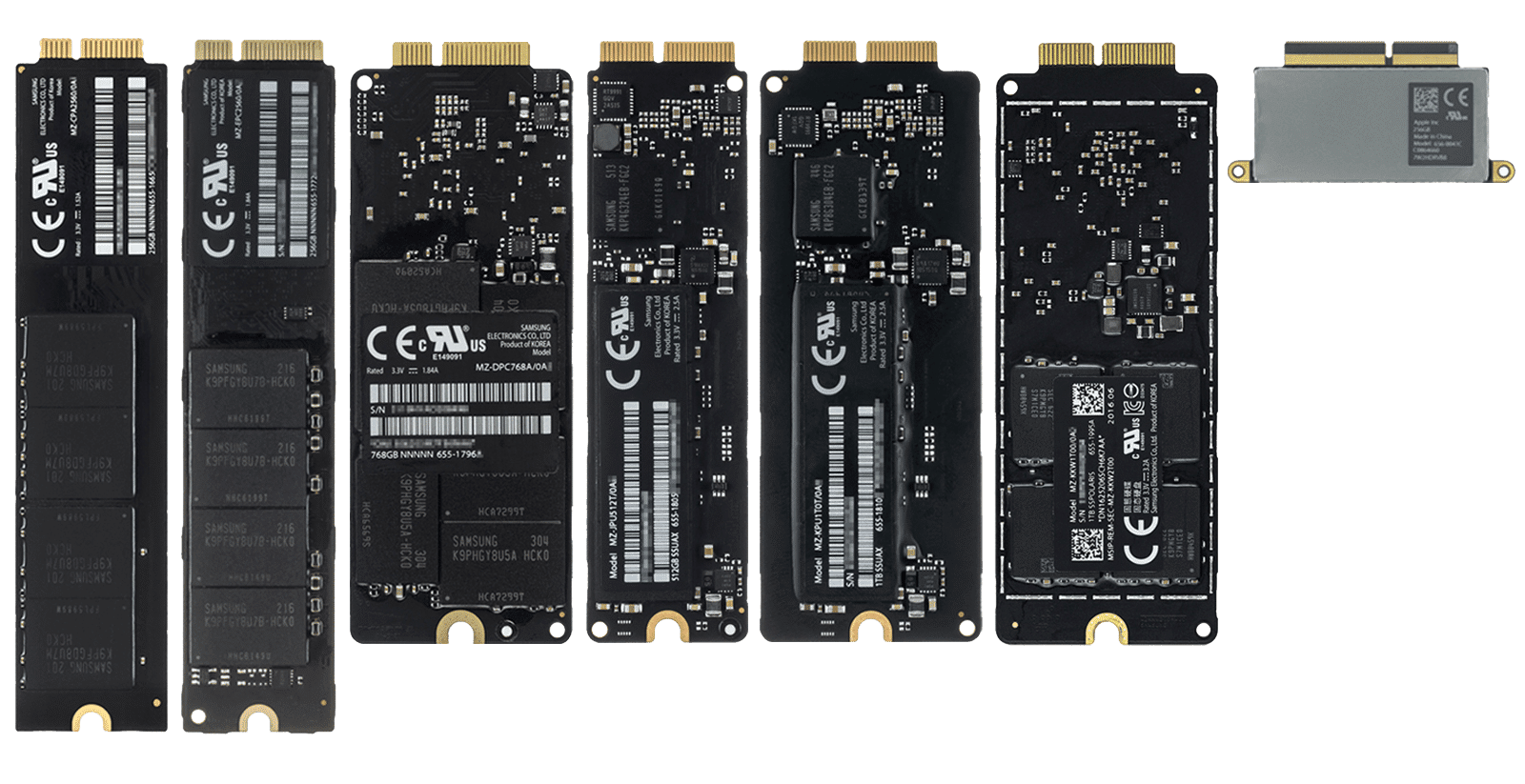
Apple making a proprietary pinout for NVME is what will keep me from ever giving them money.
https://assistenciaapplebrasilia.com.br/wp-content/uploads/2019/08/Apple-Propietary-SSD.png
It’s not like Apple uses a different controller, or that they invented a different communication standard. They just put the same communication pins from the same controller on a different physical connector, and charge you 10x for the replacement part. It’s why boards like this can work at all:
https://bartechtv.com/wp-content/uploads/2020/10/nvme2016macbookPRO-1-678x381.jpg
If Apple wasn’t using standard NVMe controller communication protocols and controllers, these adapter boards wouldn’t work at all.
The only thing that makes Apple marginally better is that the company spying on you tries to pretend like they’re not in it for your sweet data.
They might not be selling it right now, but only because they keep making money hand over fist from the non-repairable proprietary bullshit they produce. Once that faucet starts to slow down, you better believe they’ll be the next Google.
I feel like this is missing a big point of the article.
The vulnerability that the xz backdoor attempt revealed was the developers. The elephant in the room is that for someone capable of writing and maintaining a program so important to modern technical infrastructure, we’re making sure to hang them out to dry. When they burn out because their ‘hobby’ becomes too emotionally draining (either because of a campaign to wear them down intentionally or fully naturally) someone will be waiting to take control. Who can you trust? Here, we see someone attempted (and nearly succeeded) a multi-year effort to establish themselves as a trusted member of the development community who was faking it all along. With the advent of LLMs, it’s going to be even harder to tell if someone is trustworthy, or just a long-running LLM deception campaign.
Maybe, we should treat the people we rely on for these tools a little better for how much they contribute to modern tech infrastructure?
And I’ll point out that’s less aimed at the individuals who use tech, and more at the multi-billion-dollar multi-national tech companies that make money hand over fist using the work others donate.